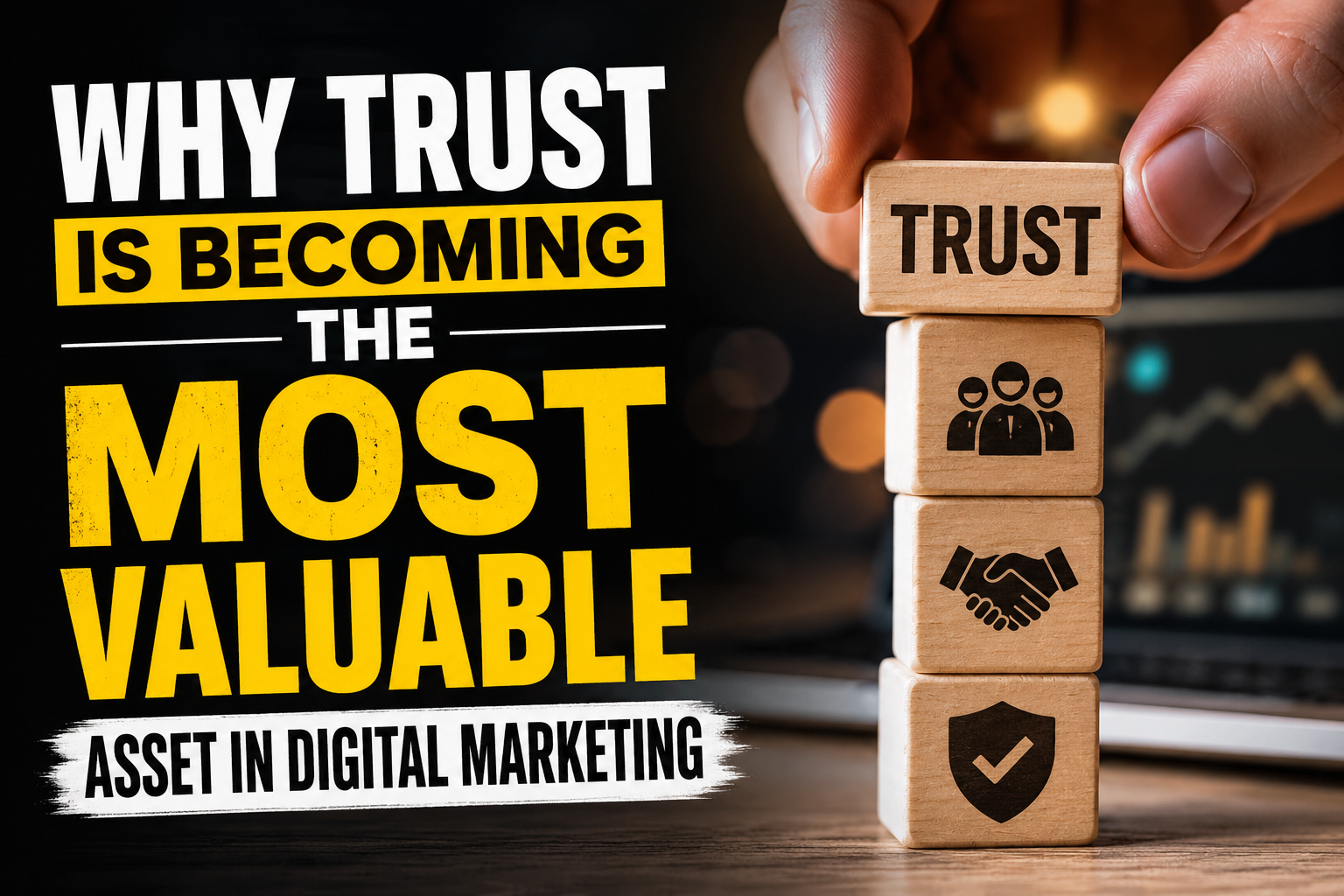
Introduction: The Internet Has a Trust Problem
Remember the last time when you bought something online. Maybe it was a software tool, online course, a laptop, or even a simple product from an unfamiliar website.
Before spending your money, you probably did what most people do today: searched for opinions, you looked for reviews, scrolled on social media about that particular product whether it is worth buying or not.
Why?
Because trust has become rare on the internet. Everyone is surrounded by advertisements, fake testimonials, clickbait headlines, misleading promises, and content that seems designed only to sell.
People have become more skeptical than ever before, and honestly it’s very hard to blame them for this.
Because of the internet, information is now accessible to everybody out there, but it has also made it easier for anyone to claim that he/she is an expert.
A professional looking website can be built in minutes using AI tools.
AI generated articles can be published in minutes. A social media profile makes people look successful even when those are 100% fake.
As a result of all this, people have stopped believing what they see online. And that’s exactly where trust is becoming one of the most valuable assets in this digital marketing world.
In 2026, the hardest thing won’t be getting attention, it would be keeping people trusting you.
Why Trust Matters More Than Ever in 2026
A few years from now, digital marketing was largely just about visibility. If you were able to bring enough traffic, enough clicks, or enough views, you could usually generate results.
Businesses were heavily focused on reaching the most number of people, often assuming that attention alone would lead to growth. But things have changed.
Nowadays, consumers are much smarter. They have seen hundreds, and thousands of ads, watched countless number of marketing campaigns, and been exposed to more content than previous generations.
They can spot exaggerated claims from miles away. That’s why trust has become the deciding factor. When people trust you, they’re willing to listen to your recommendations too.
They’re more likely to engage with your content, buy your products, subscribe to your email, and support your business. Without trust, even converting massive traffic becomes impossible.
Think about it like this: would you rather have a million visitors who don’t trust you or 100,000 people who genuinely believe in what you’re saying. The second group will give better results every single time.
Trust influences every part of digital marketing. It affects your conversions, your word-of-mouth growth, your customer retention, and even your long-term reputation.
In many ways, trust has become the foundation that every success is being built on. If you want a broader understanding of how modern marketing is evolving, check out Digital Marketing in 2026 Explained: Trends, Tools, & Secrets.
The AI Content Explosion Is Creating a Credibility Crisis
AI has completely changed the way content is being created. Today, someone can create social media posts, generate articles, advertisements, emails, and entire marketing campaigns in just a few minutes.
What once required a whole team of writers can now be done by a single person using AI tools. On the surface, this sounds cool. And in many ways, it is. But there’s also a downside to this.
Because content is now much easier to create than ever before, the internet is being flooded with information. Every day hundreds of thousands articles, posts, videos, and newsletters are published.
Most of them look similar and are saying the same thing. As a result, people are becoming more cautious.
They no longer trust content because of its existence. They want proof. They want real life examples, and experiences.
They want expertise. And the most important of all they want is authenticity. This is creating what many marketers are starting to call a credibility crisis. It has become very hard for people to find what’s genuine and what’s generated purely to attract clicks.
The creators and brands who can maintain authenticity in this environment will have a significant advantage moving further.
People Buy From Brands They Trust, Not Brands They Know
One of the biggest misconceptions people have in marketing is that creating awareness will automatically lead to sales. It doesn’t work like that. People might know your brand exists, but that doesn’t mean they’ll buy from you.
Think about how many companies you’ve heard of but never purchased from. Recognition alone is not enough. Trust is what moves someone from awareness to action.
When customers trust a brand, they feel confident and safe making any purchases or decisions related to it. They don’t worry about wasting money, being disappointed, or making a bad choice.
People trust people. In many cases, trust outweighs factors like features, price, and brand size.
A trusted brand doesn’t need to convince people constantly. The relationship has already been built.
And that’s where the real power of building trust lies.
Why Small Creators Are Building Trust Faster Than Big Companies
One of the most interesting and notable shifts happening right now is that small creators often gain trust faster than established brands. At first, that sounds strange. After all, shouldn’t larger companies be more trusted?
Not necessarily. The main problem with big brands is that they don’t feel human, or personal. They feel polished because their content goes through multiple layers of approval making it less authentic.
Result? The content feels professional but doesn’t feel human.
Small creators have an advantage here. They share their thoughts directly to the audience without any layer of approval or polishing which makes the audience get to see the person behind the context.
Small creators talk about their real life events, experiences, lessons, and share their own progress with the audience. That transparency builds trust.
When people watch someone’s journey over time, they start feeling connected to them. They begin to believe what that person says because they’ve seen consistency and honesty first hand.
This is the kind of idea about which I have talked about in more detail in How Small Creators Are Beating Big Brands in Digital Marketing (2026 Shift).
This is also one of the reasons why skills like content creation, personal branding, and audience building are becoming incredibly valuable today. I covered this trend in my blog These Digital Marketing Skills Are Making People Rich Without A Degree.
This is one of the main reasons why creator led brands are growing too fast in 2026. People aren’t following products anymore. They’re following people whom they trust.
And in a world where trust is becoming incredibly hard to find, that might be the biggest competitive advantage anyone can have.
The 5 Ways Successful Brands Build Trust Online
Trust isn’t built by miracles. The brands, and creators you trust today didn’t build that trust overnight. They earned it through hundreds of small interactions, promises, and pieces of content that they kept building consistently over time.
The good news is that trust isn’t reserved only by big and established companies. You can build it if you are willing to approach digital marketing in the right way.
1. They Show the Humans Behind the Brand
Think about the creators and brands you follow regularly. There are chances that you know something about the people behind them.
Maybe you’ve seen their post, watched their story, or simply noticed that there’s a real person sitting behind the content. That’s important because people connect with people.
When everything feels automated and seems artificial online, showing the human side of your brand instantly makes you more relatable. It helps people understand what you stand for, who you are, and why you’re doing what you’re doing.
You don’t need to share your entire life online. But letting people see the person behind all the work can make your brand feel far more trustworthy.
2. They Share Real Experiences, Not Just Marketing
Let me ask you something. Would you rather listen to someone who’s actually done the work or someone who’s simply repeating information they found online?
Most of the people would go with the first option. That’s why sharing real experiences can be so powerful. When you talk about lessons you’ve learned, challenges you’ve overcome, mistakes you’ve made, your content becomes much more believable or trustable.
People can tell when something comes from experience. And in a world where everyone seems to give advice, real experiences often stand out more than perfect marketing messages ever could.
3. They Stay Consistent With Their Message
Trust isn’t built with one single great post. It comes from consistency.
Imagine, chasing someone who completely changes their opinion every week, constantly jumps on trends, and says whatever gets attention at the moment. Eventually, you would start questioning whether they actually believe anything they say.
The same thing happens with brands. When you consistently share your thoughts, show up, and stay true to your message, people start knowing what to expect from you.
That predictability builds trust. You don’t need to be perfect. You just need to be consistent enough that people know who you are and what you stand for.
4. They Focus on Helping Before Selling
One of the most common mistakes businesses make is they try to sell too early. Every post becomes a promotion. Every piece of content becomes a sales pitch.The problem is that people don’t like feeling sold all the time.
What they do appreciate is value. When you focus on helping people first, whether that’s through advice, content, education, or insights, you start building goodwill.
You show people that you’re not only interested in taking from them.
Over time, that goodwill turns into trust. And once trust is built, selling to them will become much easier because people already believe in what you’re saying.
5. They Let Their Audience Do the Talking
You can tell people you’re good at what you do. But, honestly everyone says the same. What makes a much bigger impact is when other people say the same for you.
That’s why testimonials, case studies, good reviews, and customer stories are so valuable. They provide proof that your product, content, or service actually delivers the results.
Think about your own online behaviour. Before buying something, you’ve probably looked at reviews or checked what other people said about that particular product.
That’s because social proof reduces uncertainty. People trust other people. And sometimes, the best marketing you can have comes directly from your audience.
What Happens When a Brand Loses Trust?
Building trust requires time. Losing it can happen surprisingly fast.
Maybe a brand makes promises it can’t keep. Maybe it misleads customers. Maybe it focuses too much on short term profits and ignores the people supporting it.
Whatever the reason, once trust starts disappearing, everything becomes harder. People become skeptical. Customers stop recommending the brand. Content gets questioned. Marketing becomes less effective.
The difficult part is that rebuilding trust is usually much harder than building it in the first place. That’s why protecting your reputation is just as important as growing it.
You don’t need to be perfect all the time. Everyone makes mistakes. But being honest, willing to take responsibility, and being transparent goes a long way when things go wrong.
How Trust Impacts SEO, Social Media, and Sales
A lot of people think that trust is only relevant for branding. It’s actually much bigger than that. Trust affects almost every part of digital marketing.
For example, when someone trusts your site, they’re more likely to spend time on your pages, read your content and come back again in the future. Those are all positive signals that can indirectly support your SEO efforts.
Trust also plays a huge role on social media. People share content from creators they believe in. They engage more with people whom they trust. They recommend accounts that consistently provide value.
And when it comes to sales, trust becomes even more powerful. Think about it. If someone doesn’t trust you, why would they give you their hard earned money?
Most buying decisions are emotional before they’re logical. People want to feel confident that they’re making the right choice. Trust helps create that confidence.
This is also one of reasons why creator led brands are growing so rapidly today. As I discussed in my blog How Small Creators Are Beating Big Brands in Digital Marketing (2026 Shift), people often connect more deeply with individuals than they do with large companies.
Why Trust Will Matter Even More in the Future
If trust feels important today, I believe it will become even more important in the years ahead. The internet is becoming more crowded every single day.
More content is being published. More AI generated content information is appearing everywhere. More businesses are competing for attention.
As all of this continues, people will naturally become more selective about who they listen to. They’re not going to trust everything which appears online.
They’re going to look for credibility, authenticity, and proof. That’s why understanding the bigger shifts happening in the market is so important. The brands which only focus on getting attention may struggle.
The brands which focus on building trust will continue to grow. Because while platforms change and technology evolves, human behaviour stays surprisingly similar. People will always want to buy from people and businesses they believe in.
Conclusion: Trust Is the New Currency of Digital Marketing
If there’s one thing I want you to take away from this article, it’s this:
Attention can help people notice you and your brand. Trust is what makes them stay.
In today’s digital world, almost anyone can create and publish content, build a website, run ads or use AI tools to produce information at scale.
But not everyone can build trust. And that’s exactly why trust is becoming so valuable in today’s world.The brands, creators, and businesses that focus on being honest, helpful, consistent, and authentic will have a major advantage moving forward.
Because at the end of the day, people don’t buy from the loudest brand. They buy from the one they trust the most.
Bonus Point: 📚 Recommended Reads That Shaped My Thinking
About The Author
I’m Kushagra Shukla, a student, builder, and creator passionate about blogging, AI automation, and coding. Through my blog, Peak Persona, I break down marketing, AI, and online growth into clear, practical, and beginner-friendly insights to help creators and businesses think smarter and grow faster.
Alongside blogging, I also run PeakWorks, a web development and digital solutions agency where I help businesses build fast, modern, and high-performing websites with a focus on design, performance, and SEO.
I’m always learning, experimenting, and building with the goal of creating work that delivers real, long-term impact.
If you enjoy my content and want to support my work, you can Buy Me A Coffee Here ☕
Every bit of support helps me keep building, learning, and sharing practical insights.
If you have any work-related questions about websites, digital growth, blogging, or AI automation, you can Book Your Free 1:1 Call Here
For work inquiries, email me at: Kushagra Shukla
Leave a Reply